
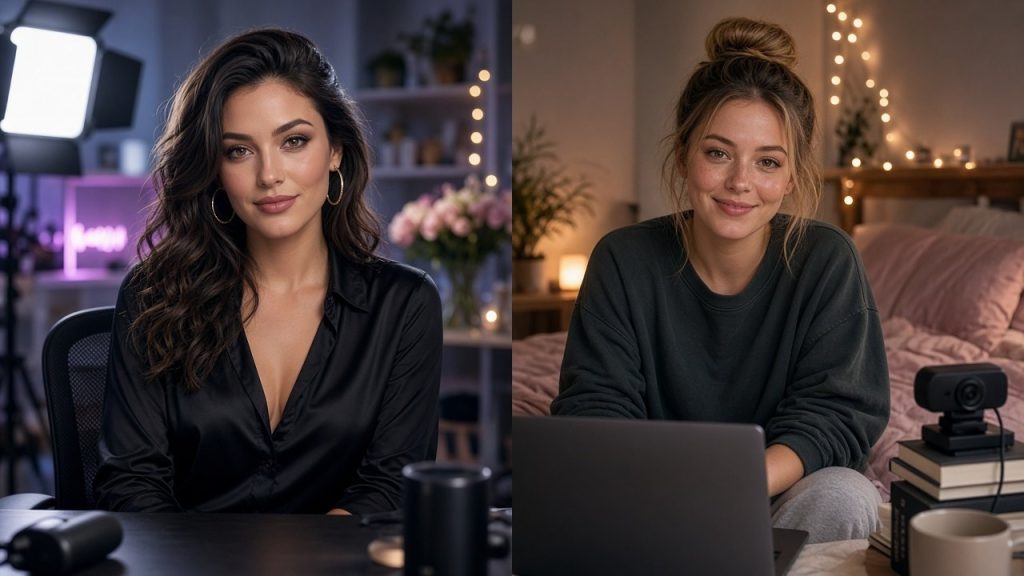
When you browse through live adult entertainment platforms, the performers on your screen generally fall into two distinct operational categories: studio professionals and independent home streamers. While both groups provide engaging live streams, their working environments, technical setups, and daily routines shape how they present themselves to viewers. Recognizing these differences can help you understand what goes into a broadcast, whether you are exploring free cam sites or looking for exclusive private sessions on premium cam sites. Over the years, our editorial team at AllBestCams has observed how these distinct backgrounds translate into visual cues, pacing strategies, and overall audience interaction.
The evolution of live streaming technology has completely transformed the adult entertainment landscape. Viewers today are more discerning than ever, often noticing subtle details like camera angles, background ambiance, and connection stability. Understanding these foundational operational differences empowers you to curate your viewing habits and find performers whose production styles match your personal preferences.
The Physical Environment and Set Design
One of the most immediate indicators of a model working within a studio environment is the background of the broadcast. Production studios typically invest heavily in specialized interior design, soundproofing, and modular sets that can be reconfigured for different visual themes. These spaces are constructed away from domestic distractions, ensuring a controlled atmosphere where background noise and unexpected interruptions are virtually nonexistent. When you watch performers on structured networks like LiveJasmin, the pristine lighting and polished room decor often reflect this professional infrastructure.
Studio spaces are deliberately engineered to create an immersive visual experience. Designers use architectural elements, specialized paint finishes, and coordinated color palettes to ensure that every camera angle looks like a professional film set. This deliberate control over the physical surroundings allows studio-backed performers to maintain a consistent aesthetic across multiple broadcasts, reinforcing their professional brand.
Conversely, home streamers broadcast from their personal living environments, which introduces an organic, intimate charm. You might notice everyday items in the background, such as a bookshelf, a bed, or a houseplant. While these spaces lack the sterile perfection of a commercial studio, they offer a genuine window into the performer’s actual lifestyle. This authenticity fosters a distinct sense of personal connection that many viewers actively seek out when choosing who to support.
Lighting and Acoustics
Studio models usually benefit from professional-grade lighting rigs, softboxes, and acoustic treatment panels designed to eliminate echo. This technical preparation ensures that the video feed remains crisp and the audio is clear, even during high-energy performances. In contrast, home streamers often rely on ring lights or window light, and their acoustics might feature subtle room echoes depending on their current living situation.
Proper illumination is critical in live broadcasting. Studios employ multi-point lighting setups that eliminate harsh shadows and highlight the performer’s features evenly. Acoustic panels absorb ambient noise, ensuring that every word spoken or sound made is transmitted with crisp clarity. Home streamers continually work to improve these elements, often investing their own capital into upgrading home-office lighting and adding DIY soundproofing materials as their streaming careers grow.
Prop Availability and Storage
Studios provide ample storage space for a vast array of costumes, furniture pieces, and interactive devices. A model broadcasting from a commercial facility can easily switch between multiple distinct sets or utilize large props that would be impractical in a standard apartment. This logistical advantage allows studio-backed performers to refresh their aesthetic frequently without cluttering their personal living quarters.
Having a dedicated warehouse or storage room on-site means that studio performers can experiment with elaborate themes, high-end furniture, and bulky equipment without worrying about space constraints. Home streamers, meanwhile, must carefully manage their available square footage. They often rely on versatile, compact items and clever organization to keep their streaming space looking tidy and varied without overwhelming their personal homes.
Technical Hardware and Broadcast Stability
Reliable technology is the backbone of any successful live stream, and the infrastructure supporting a broadcast differs significantly between studios and home offices. Studios generally maintain commercial-grade internet connections with dedicated backup lines, high-end encoding hardware, and redundant power supplies. This minimizes the risk of sudden disconnections, dropped frames, or technical glitches that can disrupt a paid private show.
When a viewer invests tokens or credits into a private session, they expect uninterrupted visual and audio clarity. Studio infrastructure is explicitly designed to prevent the technical frustrations that can ruin an intimate experience. Network engineers monitor bandwidth usage and server loads continuously, ensuring that all streams running out of the facility maintain optimal bitrates and resolution.
Home streamers manage their own technical troubleshooting. While many invest in robust fiber-optic internet packages and high-performance computers, they remain susceptible to localized internet outages, neighborhood bandwidth throttling, or hardware malfunctions. An independent creator must act as their own IT department, diagnosing network drops and software crashes on the fly while keeping their audience entertained.
Software and Encoder Utilization
Many independent creators explore guides such as Browser Broadcast vs OBS for Cam Models to optimize their streaming software manually. Studio setups, however, often standardize these technical configurations across multiple rooms, managed by dedicated support staff who monitor connection health and audio fidelity in real time. This technical oversight allows performers to focus entirely on viewer engagement rather than troubleshooting software updates.
Mastering broadcasting software involves tweaking bitrates, audio drivers, and display capture settings. Studio models bypass this steep learning curve because technicians pre-configure their hardware and software environments. Home streamers, on the other hand, often take great pride in customizing their streaming deck, integrating chat bots, custom alerts, and dynamic overlays to create a uniquely tailored broadcast environment.
Scheduling and Availability Patterns
The daily routine of a studio model often resembles a traditional shift-based employment model, whereas home streamers typically enjoy complete autonomy over their timetables. Studio facilities may operate around the clock, assigning specific rooms to different performers in rotating shifts to maximize site visibility. This structural discipline means that certain popular studio performers maintain remarkably predictable schedules, making it easier for regular viewers to catch them online.
Predictability is a major asset for regular community members. Knowing precisely when a favorite performer logs on allows viewers to plan their day and secure their spot in upcoming shows. Studios enforce these schedules to ensure maximum occupancy of their rooms, which benefits both the facility management and the individual performers through consistent platform exposure.
Independent home streamers dictate their own hours based on personal energy levels, lifestyle choices, and domestic responsibilities. While this flexibility is a primary perk of independent work, it can sometimes make schedules erratic. A home streamer might broadcast for ten hours one day and take the next three days off, requiring viewers to rely on social media notifications and platform alerts to stay informed.
Consistency Across Time Zones
Because studios coordinate multiple performers, they can often ensure that their rooms remain active during peak global traffic hours. Independent home streamers, on the other hand, set their own hours based on personal preference, lifestyle, and local time zones. If you enjoy watching diverse international talent, you will often find independent creators adapting their hours dynamically across platforms like Chaturbate or Stripchat.
Global traffic patterns dictate when platforms experience the highest volume of active users. Studios strategically schedule their talent pool to capture these lucrative windows. Independent creators must analyze their own analytics dashboards to determine when their specific audience segment is most active, leading to diverse streaming schedules that span various international time zones.
Interaction Style and Audience Management
The boundary between performer and viewer can feel slightly different depending on where the broadcast originates. Studio models often work in shared or semi-enclosed professional environments, which can influence how they converse with chat participants. They tend to maintain a polished, customer-service-oriented persona that prioritizes steady interaction and efficient management of public rooms and private requests.
In a studio setting, the atmosphere often mirrors a professional workplace. Performers are accustomed to managing high volumes of incoming chat messages, tipping goals, and private requests simultaneously. This environment encourages a structured, highly responsive approach to audience management, ensuring that tipping incentives are met and viewers feel acknowledged promptly.
Home streamers frequently cultivate a more relaxed, casual atmosphere. Because they broadcast from their personal sanctuary, their interactions often feel like hanging out with a friend. They might share personal anecdotes about their day, chat candidly about their hobbies, or involve pets in the stream. This casual demeanor builds deep emotional bonds with regular community members who appreciate the unscripted intimacy.
Handling Multiple Platforms
Independent home streamers frequently manage their own administrative tasks, social media marketing, and community building directly from their personal devices. They might incorporate interactive elements like those detailed in What Lovense Levels Mean for Viewers to drive engagement organically. Studio performers also use these interactive tools, but their approach is often integrated into broader team strategies and platform-specific promotional campaigns.
Multi-tasking is essential for modern adult creators. Independent streamers handle their own Twitter accounts, Telegram channels, and subscriber platforms, building an independent brand that transcends any single broadcasting site. Studio models may have marketing teams or managers handling their promotional outreach, allowing the performer to concentrate almost exclusively on live performance delivery.
Visual Comparison of Broadcast Characteristics
| Feature | Studio Models | Home Streamers |
|---|---|---|
| Backgrounds | Controlled, professional sets with frequent thematic changes | Personal living spaces, bedrooms, or dedicated home offices |
| Audio/Video Quality | Commercial lighting and dedicated acoustic treatment | Varies widely based on individual equipment and budget |
| Connection Stability | Backed by commercial redundant internet lines and IT staff | Dependent on domestic residential internet service providers |
| Scheduling | Often structured around fixed studio shifts and rotations | Fully flexible and determined entirely by the individual |
Examining this comparison highlights how operational frameworks directly dictate the end-user experience. Neither model is inherently superior; rather, each caters to different viewer desires. Whether you prefer the cinematic polish of a studio production or the cozy, spontaneous nature of an independent broadcast, understanding these differences helps you navigate the diverse ecosystem of live entertainment platforms.
Content Diversity and Niche Specialization
Both studio environments and home setups accommodate a wide variety of content genres, but they approach niche preferences differently. Studios sometimes pool resources to create specialized rooms dedicated to specific fetishes or high-production themes, utilizing professional props and multi-camera angles. For broader community exploration, viewers often browse options on Bongacams or CamSoda to see how both types of creators cater to specialized interests.
Niche content thrives in the digital entertainment space. Studios can invest in elaborate custom sets for specific fetishes, creating environments that would be far too costly or space-prohibitive for an individual working out of a bedroom. This corporate backing enables highly immersive themed shows that satisfy very specific viewer fantasies with professional precision.
On the other hand, home streamers excel at organic niche exploration. If a home creator develops an interest in a new hobby, costume style, or interactive dynamic, they can introduce it into their stream within minutes. This rapid adaptability allows independent streamers to build deeply dedicated, loyal communities centered around unique personal tastes and evolving creative projects.
Creative Freedom
Home streamers generally possess absolute control over their content direction, allowing them to pivot quickly into new niches or experiment with spontaneous ideas. Whether they are adapting to trends or managing specific viewer preferences, independent creators can modify their broadcast style instantly. Studio models may have more standardized operational guidelines depending on the management team overseeing the facility.
Autonomy is one of the greatest perks for independent creators. They answer only to themselves and platform Terms of Service, granting them the freedom to take creative risks. Studio models operate within a business partnership where management provides infrastructure, marketing, and technical support in exchange for adherence to certain operational standards and brand guidelines.
Frequently Asked Questions
Can viewers easily tell if a model is in a studio or at home?
Often yes, through visual clues such as professional studio lighting, specialized acoustic paneling, and modular background sets that look distinct from residential rooms.
Do studio models make more money than home streamers?
Earnings vary entirely based on individual popularity, viewer engagement, and time invested, regardless of whether a performer works from a studio or a home office.
Are private shows better with studio models?
Private show quality depends on the individual performer’s communication and connection stability, though studios generally guarantee high-speed technical infrastructure.
Do home streamers have more control over their schedules?
Yes, independent creators enjoy complete autonomy over when they broadcast, whereas studio models often adhere to assigned facility shifts.
Which type of broadcast is more common on mainstream sites?
Both models share the digital space, with independent home streamers dominating open community platforms and studio models maintaining a strong presence on premium networks.
Bottom line
Understanding the distinction between studio-backed performers and independent home streamers adds another layer of appreciation to your live cam viewing experience. Each setup brings distinct advantages, from the polished production value of professional studios to the authentic spontaneity of home broadcasts. By knowing what to look for, you can better navigate platforms, choose your preferred style of interaction, and make the most of your time online.
Ultimately, the live adult entertainment industry thrives on this diversity. The coexistence of high-end corporate studios and authentic home creators ensures that every viewer can find content that resonates with their personal tastes. Whether you appreciate the reliability and cinematic quality of a studio environment or the raw, personal charm of an independent home stream, recognizing these operational nuances enhances your overall engagement and helps you build rewarding connections across the digital landscape.